info@ardantsolutions.com | +1-868-375-0551

Where Should Your Elevator Go—And Why Does It Matter More Than You Think?
When someone walks into your multi-story building, what’s the first thing they search for?
Most often—it’s the elevator.
And whether that visitor is a client, tenant, patient, or employee, the elevator sets the tone for their entire experience.
Elevators aren’t just mechanical necessities. They’re central to how people move through your space. They influence wayfinding, accessibility, and even the emotional experience of entering a building. Done well, they add real estate value, improve flow, and project professionalism. Done poorly, they cause confusion, non-compliance, and costly inefficiencies.
So, how do you get elevator placement right? Let’s take a closer look.
Elevator Placement and Legal Accessibility
In any public or commercial space, accessibility isn’t optional—it’s law.
The Americans with Disabilities Act (ADA) requires that elevators be not only physically accessible, but also easy to find and reach. That means they must be visible, logically located near key entrances or common paths, and fully usable for individuals with mobility challenges.
An elevator hidden down a long corridor or placed behind obstructed walls, even if dimensionally compliant, could fall short of ADA standards. That translates to missed opportunities, user frustration, and potential legal risk.
Key Insight:
Accessibility is about dignity and design. Elevators should invite people in—not make them feel like an afterthought.
Fitting Elevators into Existing Buildings
What happens when your building wasn’t originally designed for an elevator?
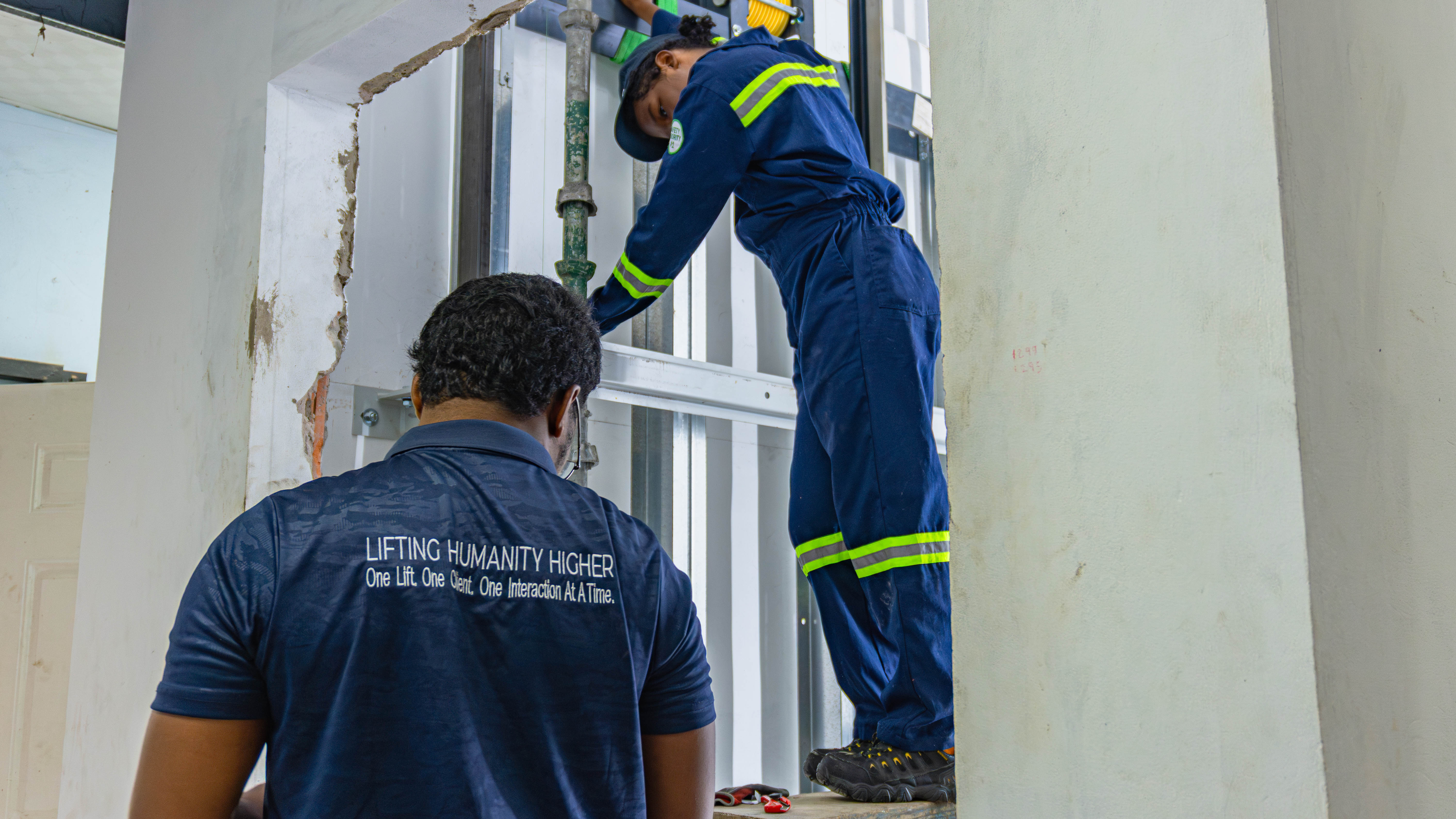
It’s a common challenge, especially in older structures. Retrofitting an elevator means choosing a location that preserves space, complements existing architecture, and avoids compromising the structural integrity of the building.
In buildings with spacious lobbies or open entrance areas, elevators can often be seamlessly integrated into the visible façade. Other common options include:
- Atriums, where vertical space is already a design feature
- Stairwells, when space is limited but centrally located
- Exterior shafts, for minimal disruption to internal flow
Every placement comes with trade-offs. But with the right experts, thoughtful placement can look and feel like it was always meant to be there.
Creating the Right Experience Inside the Elevator
Once the location is selected, attention must turn to interior design and compliance.
An elevator cab should never feel cramped or uncomfortable. According to ADA standards:
- Doorways should be a minimum of 36 inches wide
- Cabins must be at least 68 inches wide and 51 inches deep
- With center-opening doors, the minimum width expands to 80 inches
But measurements aren’t the only factor. Consider the psychological experience of space. Lighting, mirrors, textures, and materials all contribute to whether riders feel at ease—or claustrophobic.
Pro tip:
Use light-colored walls, well-placed mirrors, and soft but sufficient lighting to create a sense of openness, even in smaller cabins.
Safety Systems and Inspections
Beyond comfort, elevators must meet stringent safety requirements. Routine inspections look for components such as:
- Car and counterweight buffers
- Overspeed governors
- Slack-rope safety devices
- Standby power systems
Up-to-date documentation and compliance with local building codes are non-negotiable. It’s not just about passing inspections—it’s about protecting lives.
Lighting, Materials, and Brand Image
The materials and lighting you choose inside the elevator say something—about your brand, your building, and your attention to detail.
- Stainless steel cabs evoke strength, cleanliness, and modernity.
- Wood veneer panels may communicate warmth, tradition, or luxury.
- Brushed finishes paired with soft LED lighting create a calming, contemporary feel.
These choices aren’t purely aesthetic—they also impact how lighting behaves in the space. A reflective surface brightens the cabin, while matte materials absorb light and create mood.
Remember:
Your elevator is often one of the first enclosed spaces your visitors encounter. It should reflect who you are.
The Value of Partnering with Professionals
Elevator users also play a role in minimizing repairs by practicing proper usage. Here are a few elevator maintenance tips to follow:
Designing and positioning an elevator is never a one-size-fits-all project. That’s why partnering with professionals is key. From the structural feasibility of shaft construction to 3D renderings of cabin interiors, expert guidance ensures your vision becomes reality—without delays, non-compliance, or cost overruns.
Avoid forcing doors open or closed.
Use buttons gently and responsibly.
Do not transport liquids or heavy materials without proper precautions.
Never throw water or liquids on elevator components.
Let’s Build Something That Moves People—Literally and Emotionally
At Ardant Solutions, we understand that elevators are more than equipment. They’re expressions of how you care for your people, clients, and guests.
Let us help you plan, design, and implement a vertical transportation system that adds value, elegance, and effortless accessibility to your building.
Frequently Asked Questions
1. Do I need to consult an expert to determine elevator placement?
Absolutely. Elevator experts and architects can evaluate your building layout, structural constraints, and user traffic to determine the best placement for safety, flow, and compliance.
2. What factors influence elevator location in new or existing buildings?
Key considerations include accessibility, foot traffic patterns, space availability, structural load capacity, emergency access, and future expansion plans.
3. How does elevator placement impact efficiency?
Well-placed elevators reduce congestion, shorten travel distances, and improve wayfinding. This results in smoother operations and happier occupants.
4. What about emergencies—does placement affect evacuation?
Yes. Elevators should be easy to access for emergency responders and designed for safe evacuation procedures. Placement plays a major role in emergency readiness.
5. Should elevators be located near the main entrance?
In most cases, yes. Elevators near main entrances create a seamless, intuitive experience for users, especially those with mobility needs or time-sensitive tasks.
Your next great impression begins at the elevator.
Let’s make sure it’s the right one.
📧 Contact us at info@ardantsolutions.com
📞 Trinidad: 1 (868) 375-0551 | Guyana: +592-724-2979
🌐 Website: www.ardantsolutions.com